


Rare disease trials face three compounding barriers: they're slower to recruit for, harder to reach geographically, and more mentally taxing for the patients trying to enroll in them. Mobile, point-of-need care addresses all three directly by bringing screening and assessments to wherever a patient already is, rather than requiring a trip to a specialized site. That gap matters at scale: approved treatments exist for only about 5% of the more than 10,000 identified rare diseases, and while the U.S. leads global rare disease research, with just over half of all rare disease trials involving a U.S. site, there's still significant room to improve access.
Why Do Rare Disease Trials Take Longer to Recruit and Conduct?
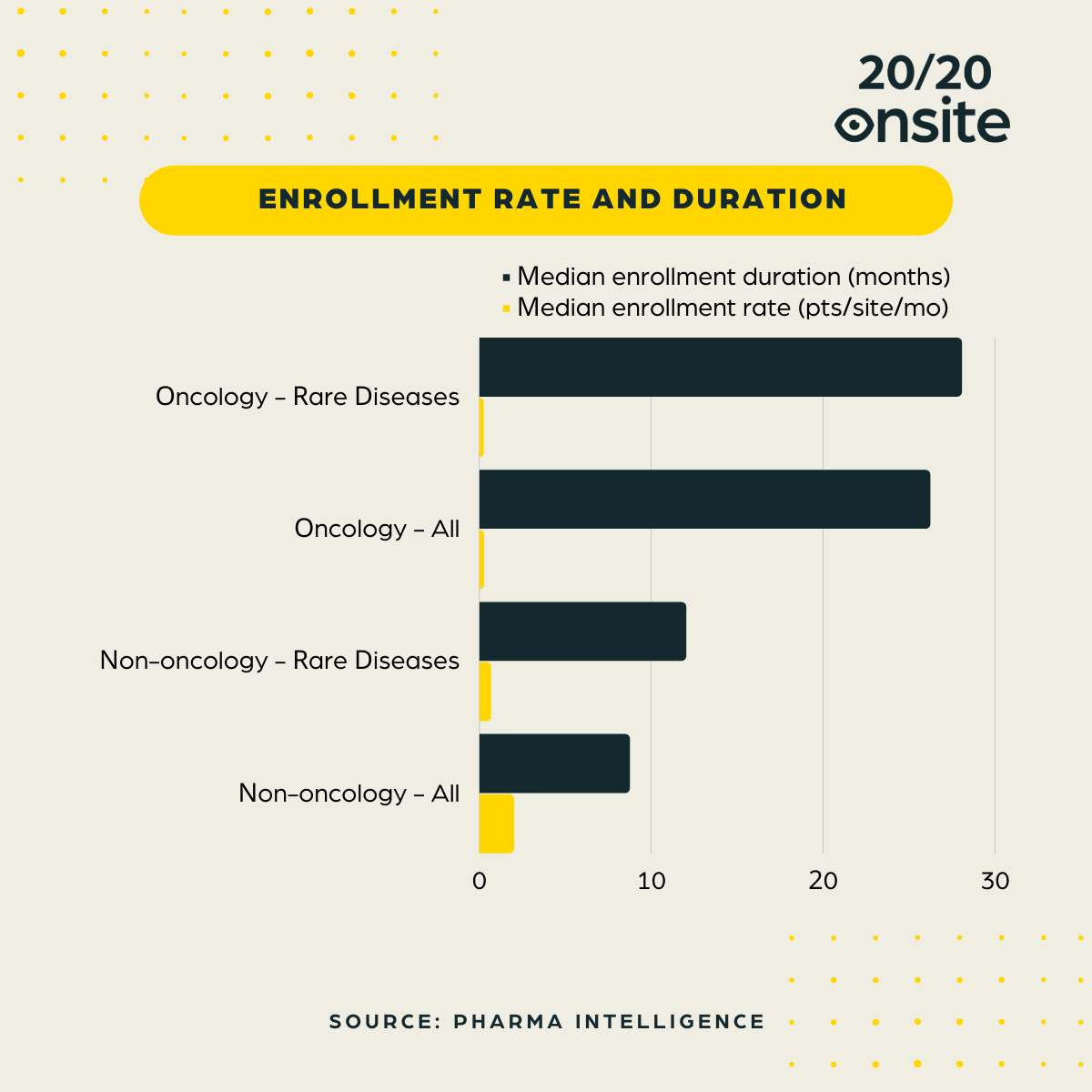
The World Health Organization defines a rare disease as having a prevalence of one or fewer in 1,000 people, which makes the eligible patient pool for rare disease trials inherently smaller than for non-rare disease studies, directly slowing enrollment. The gap is most pronounced for non-oncology rare diseases, where a clinical trial site enrolls an average of 0.68 patients per month, compared to 2.02 patients per month across non-oncology diseases generally.
Rare disease studies typically take longer to recruit and conduct.
Screening adds its own difficulty. It's often not feasible to narrow qualifying criteria based on disease stage or comorbid conditions the way broader trials can, which makes every eligible patient found that much more valuable to retain.
How Can 20/20 Onsite Accelerate Rare Disease Trial Recruitment?
As a clinical research partner on wheels, 20/20 Onsite can travel to any community in the United States, regardless of proximity to a major medical center or established trial site.
Beyond simply reaching more patients, pre-screening the patients we do reach helps qualify them for the next phase of the trial before they ever get to the clinical site. That means they arrive having already gone through one round of screening, which positively affects statistics like enrollment speed and screen failure rate.
Why Is Finding a Trial Close to Home One of the Biggest Barriers to Participation?
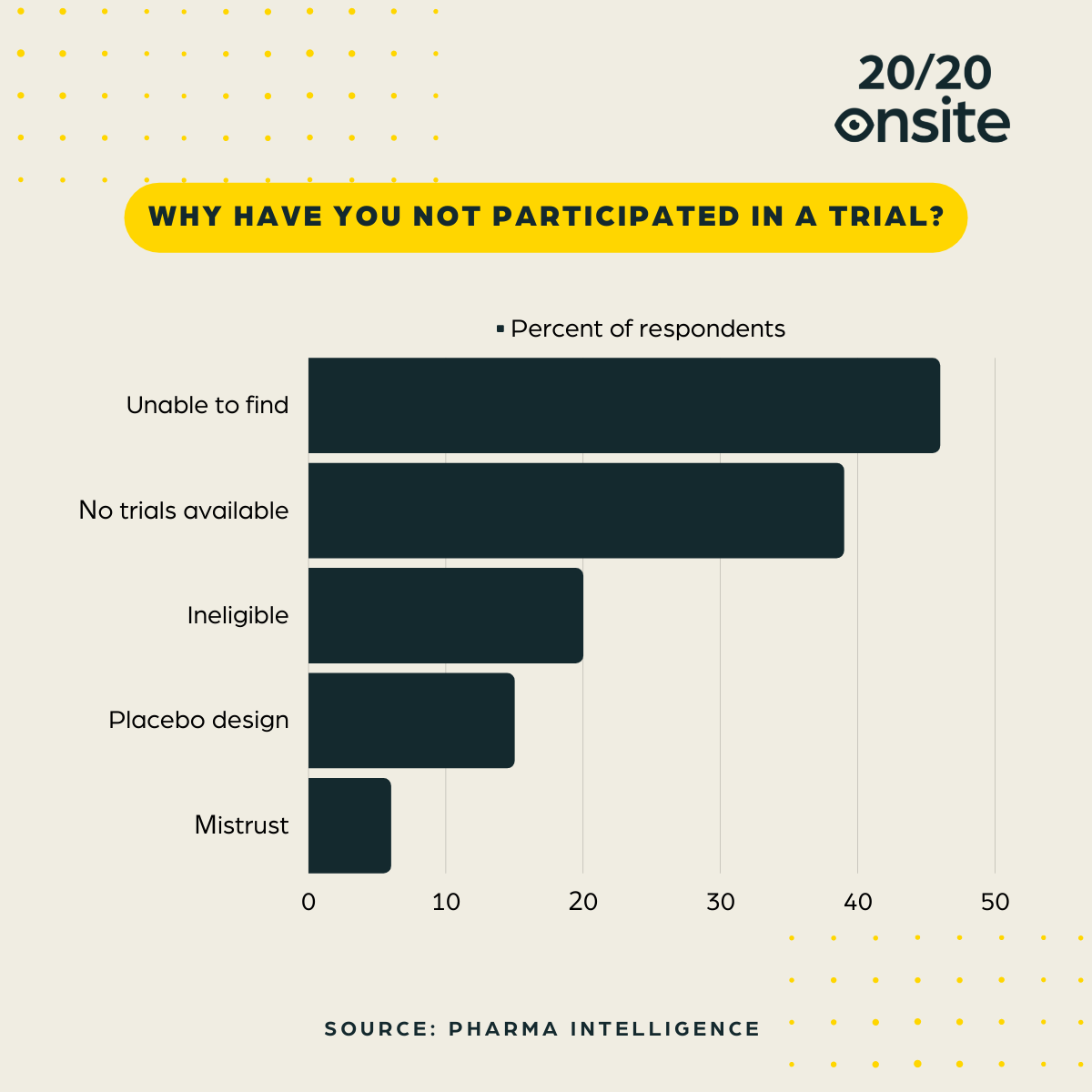
A Pharma Intelligence white paper on rare disease trial strategies found that the most prevalent obstacles to participation are locating a trial that's geographically convenient and appropriate for a patient's specific condition.
Another study found the longest distance traveled by a patient in a Phase 1 clinical trial was 41.2 miles, with travel burden highest among patients enrolled in NIH-sponsored trials, Phase 1 studies, or those living in low-income areas. That same study found white patients enrolled in cancer clinical trials tended to travel longer distances than non-white patients, suggesting non-minority patients may simply have more means available to travel for care.
How Does 20/20 Onsite Reduce Travel Burden for Rare Disease Patients?
Mobile healthcare services are a proven way to reach more diverse communities and reduce travel burden, particularly for rare disease patients and caregivers who already face outsized challenges getting to appointments. 20/20 Onsite's clinic travels directly to a patient's home, workplace, or physician's office, making follow-up visits far easier to keep. Historically, clinical patients traveled an average of 12.36 miles to receive care aboard a Mobile Vision Clinic, compared to the 40+ mile average cited above.
Driving the clinic to patients isn't the only lever available. Pre-screening can also happen virtually: in one instance, 20/20 Onsite optometrists used a virtual interview to determine a patient's eligibility, eliminating the need for an in-person evaluation entirely.
"The patient was effusive about his gratitude for this trial existing, and his ability to partake. He was especially thankful that we were able to see them just across the street from his job. Transportation, even within a short distance, is difficult for this patient given that they can't drive. Being met where they were and reducing any additional travel or logistics coordination made them feel particularly well cared for." — A 20/20 Onsite clinical trial patient account
Recommended reading: 3 Common Barriers to Patient Recruitment in Clinical Trials
Why Is Mental Health a Major Concern for Rare Disease Patients?
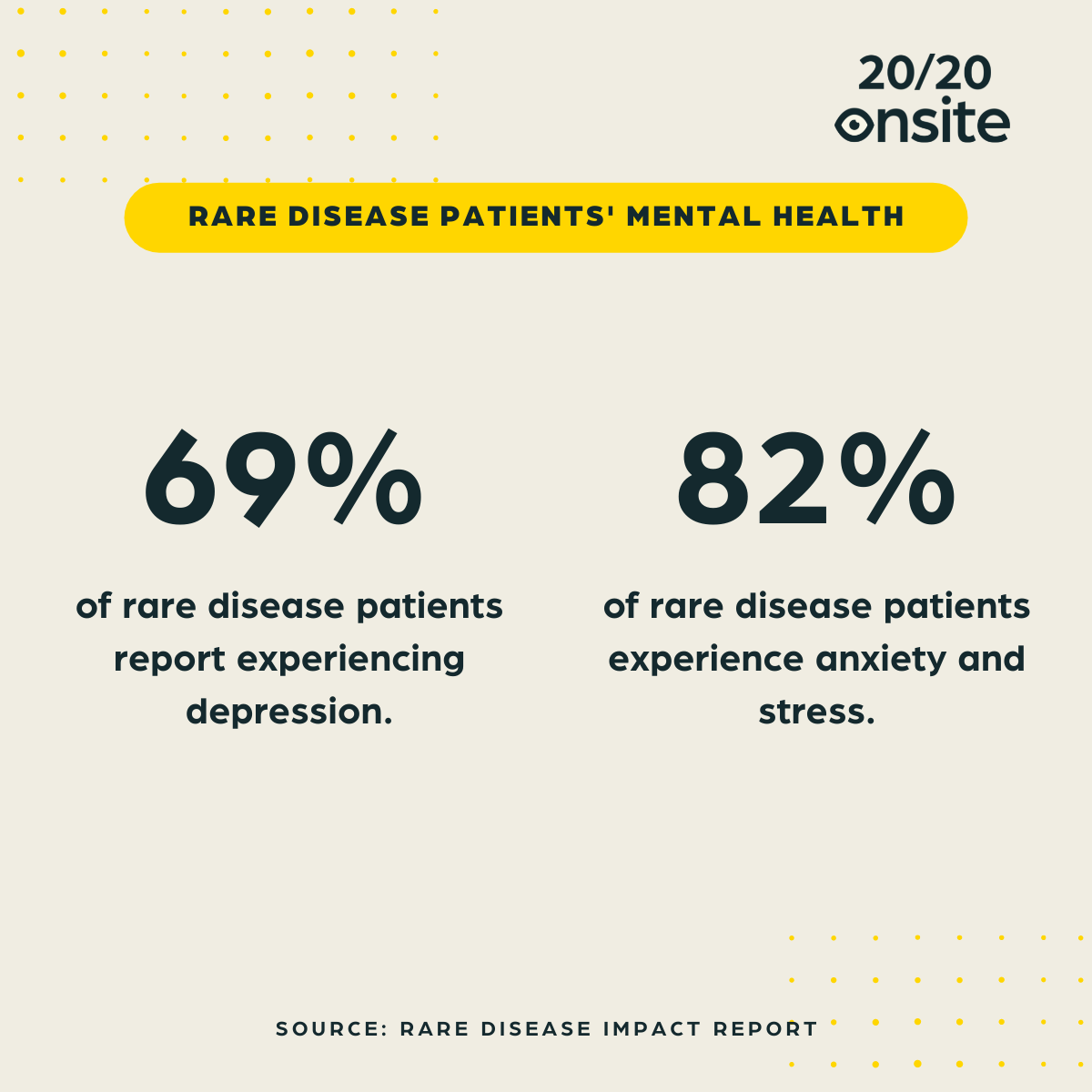
A first-hand account published in the Orphanet Journal of Rare Diseases describes a patient's 17-year wait for a correct diagnosis after seeing a wide range of doctors and clinicians. The average rare disease patient waits 4 years and sees 5 different doctors before diagnosis. As she put it: "One way in which I view my life is as a series of precarious balances. Balancing the need for a clear diagnosis with the need to get on with life. Balancing the time spent in hospitals as a patient with the time spent studying there as a medical student. Balancing the wish to have completely honest conversations with doctors with the worry that they will no longer take you seriously if you do so."
Finding treatment adds mounting stressors on top of that diagnostic journey, often complicated further by complex trial procedures or inconvenient study locations. Coordinating transportation with loved ones and taking time off work to check in with a doctor compounds the toll the disease itself already takes on mental health.
How Can 20/20 Onsite Create a Better Experience for Rare Disease Clinical Trial Patients?
38% of clinical trial patients who dropped out of a trial cited their site visits as stressful. For a patient managing a rare disease, the visit itself should be the least stressful part of finding care. Working with 20/20 Onsite means access to a pre-screened, licensed optometrist and an experienced customer success team member, both contributing to a consistently above-average patient satisfaction score.
Feedback from patients, including pediatric patients, and clinics in current clinical programs reflects that directly:
- "Everyone made my very nervous 7-year-old feel very welcomed and comfortable. They allowed him to see what the equipment did before performing his exam. Thank you to all the wonderful people at 20/20 Onsite for making this happen."
- "We have so many families in rural areas that do not have eye care service. I can see so many families benefiting from this."
- "Very friendly and used extreme safety due to COVID."
Give Your Rare Disease Trial Participants a Better Experience
Request a rare disease trial resource from 20/20 Onsite's team to learn more about how mobile, point-of-need care can improve participant experience, reduce travel barriers, and improve enrollment and retention for your rare disease study.
Frequently Asked Questions
Why are rare disease clinical trials slower to enroll than other trials? Rare diseases affect one or fewer people per 1,000, per the World Health Organization's definition, which makes the eligible patient pool inherently smaller. Non-oncology rare disease trials enroll an average of 0.68 patients per site per month, compared to 2.02 patients per month across non-oncology diseases generally.
What is the biggest barrier to rare disease trial participation? Finding a trial that's geographically convenient and appropriate for a patient's specific condition. A Pharma Intelligence white paper on rare disease trial strategies identified this as the most prevalent obstacle to participation across the rare disease community.
How much travel burden does mobile point-of-need care remove for rare disease patients? Patients receiving care aboard a 20/20 Onsite Mobile Vision Clinic traveled an average of 12.36 miles, compared to a documented Phase 1 trial travel distance as high as 41.2 miles in a separate study of clinical trial participants generally.
Can rare disease patients be pre-screened without an in-person visit? Yes. 20/20 Onsite has used virtual interviews conducted by licensed optometrists to determine patient eligibility in some cases, removing the need for an in-person evaluation before the next phase of screening.
Why does mental health matter so much in rare disease trial design? Rare disease patients often wait years for a correct diagnosis, an average of 4 years and 5 different doctors, before ever reaching a trial. Complex procedures and inconvenient study locations add further stress on top of that existing burden, and 38% of clinical trial dropouts cite stressful site visits as a factor in leaving a study.
How does 20/20 Onsite support rare disease trial recruitment specifically? By traveling directly to communities regardless of proximity to a major medical center, and by pre-screening patients before they reach the clinical site, which improves enrollment speed and reduces screen failure rates for populations that are already difficult to recruit.
What kind of feedback have rare disease trial participants given about mobile care? Feedback has highlighted comfort for pediatric patients, appreciation from families in rural areas without local eye care access, and consistent notes on safety and friendliness of the care team, alongside direct testimonials about reduced travel and logistics burden.